Mind the Gap: The Widening Chasm Between Data Growth and Storage Capacity

The warning echoes through underground stations across London: “Mind the gap.” It’s a simple reminder about a dangerous space between platform and train. Today, IT leaders face their own perilous gap, one that’s widening at an alarming rate. The chasm between explosive data growth and sluggish storage capacity expansion threatens to derail digital transformation strategies worldwide.
For many IT teams and service providers, this is no longer just a capacity planning issue, it is a search for object storage for backup that can scale economically and securely.
Numbers Don’t Lie
Data creation isn’t just growing, it’s accelerating at a breathtaking pace. According to IDC’s Global DataSphere forecast, the world generated approximately 64.2 zettabytes of data in 2020. By the end 2025, this figure is projected to reach 181 zettabytes, representing a compound annual growth rate (CAGR) of over 23%. Looking further ahead, Statista estimates global data creation will surge from 181 zettabytes by end 2025 and could exceed 400 zettabytes by 2030.
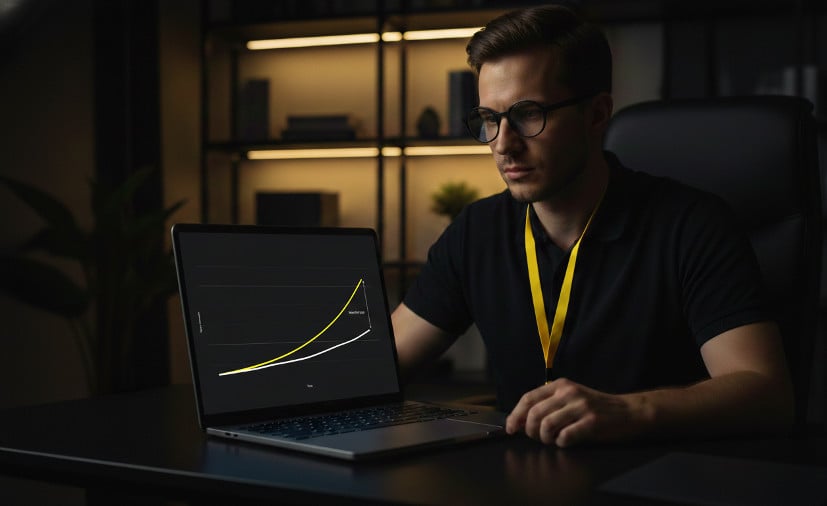
But here’s where the gap emerges. While data generation charges ahead at rates approaching 30% annually in many enterprise environments, global storage capacity, the physical infrastructure needed to house this data, is expanding at a markedly slower pace of approximately 18-20% per year, according to industry analysts at Trendfocus and IDC. This 10-12 percentage point disparity might seem modest on paper, but compounded annually, it represents a crisis in the making.
The Perfect Storm
Several converging forces are driving this unprecedented data surge, and each deserves attention.
The Hungry Giant
AI and machine learning workloads have become voracious consumers of storage. Training a single large language model can require processing hundreds of terabytes of data. According to research from Stanford’s AI Index Report, the computational power required for AI training has increased by over 300,000x since 2012. Every organization experimenting with AI—from healthcare providers analyzing medical imaging to retailers optimizing supply chains—is generating and storing exponentially more data than traditional applications ever required.
The Backup Evolution
The traditional 3-2-1 backup rule (three copies of data, on two different media types, with one copy offsite) served organizations well for decades. But ransomware changed everything. Cybersecurity experts now advocate for enhanced strategies like the 3-2-1-1-0 rule, adding an immutable, air-gapped copy and ensuring zero errors in backup verification.
This evolution means organizations that previously maintained three backup copies are now implementing five or more. Veeam’s 2024 Data Protection Trends Report found that 85% of organizations experienced at least one cyberattack in the past year, with 75% of those attacks targeting backup repositories. The response? More copies, more frequently, stored longer. Each additional copy multiplies storage requirements exponentially.
This is why demand is rising for ransomware-resilient backup storage, particularly S3-compatible backup storage that supports immutability, verification, and long-term retention at scale.
Regulatory Compliance
Data retention regulations continue to tighten globally. GDPR in Europe, CCPA in California, and industry-specific mandates like HIPAA and SOX require organizations to maintain data for extended periods, often seven to ten years or more. Financial services firms report that regulatory data retention requirements have increased their storage needs by 40-60% over the past five years alone, according to a 2023 Gartner survey.
The Economic Equation
This storage capacity gap isn’t just a technical challenge, it’s an economic crisis for many organizations. The cost of enterprise storage, while declining on a per-terabyte basis, hasn’t fallen fast enough to offset the volume explosion. Forrester Research estimates that storage costs account for 25-35% of total IT infrastructure spending for mid-to-large enterprises.
Traditional cloud storage initially promised relief through pay-as-you-grow models. However, many organizations discovered the hard way that egress fees, API calls, and tiered storage pricing created unexpected costs. A 2023 study by Andreessen Horowitz found that companies spending over $100 million annually on cloud services can see storage-related costs consume 30-50% of their total cloud bill.
MSPs (Managed Service Providers) find themselves caught in the crossfire, with growing client demand for backup and disaster recovery increasing pressure to deliver profitable, scalable MSP object storage services. However, traditional storage economics make it increasingly difficult to deliver these services profitably while remaining competitive on pricing.
Closing the Gap
The storage capacity gap demands innovative thinking. Organizations can’t simply buy their way out of this problem, the economics don’t work. Instead, they need fundamentally different approaches to storage architecture.
“This is where software-defined storage solutions represent a paradigm shift, especially for providers looking to deploy object storage for backup on standard hardware rather than relying on proprietary appliances or costly cloud tiers – whether in centralized data centers, at the edge, or in hybrid configurations”. – Peter Boyle, CEO Exaba
For MSPs specifically, this model offers transformative potential. Rather than reselling expensive proprietary storage or absorbing hyperscaler pricing complexity, forward-thinking providers are increasingly evaluating an alternative to hyperscaler storage for MSPs that gives them more control over margins, performance, and customer experience. Exaba enables MSPs to become cloud providers themselves, offering sovereign, locally-deployed storage that keeps data close to customers while maintaining complete control.
Consider the Exaba approach: LocalScaler storage software runs on standard hardware, eliminating vendor lock-in and allowing MSPs to build storage infrastructure at commodity prices. The software, built using memory-safe Rust programming language, provides enterprise-grade security without the enterprise-grade price tag. SOC2 certification and Veeam Ready certification ensure compliance and interoperability with leading backup platforms.
This model fundamentally alters the economics. MSPs can deploy storage capacity incrementally, scaling as customer needs grow, while offering backup services at competitive prices that still maintain healthy margins.
Clients benefit from local data residency, reduced latency, and backup storage without egress fees, avoiding the unpredictable cost structures often associated with large public cloud platforms.
Sovereign Object Storage
Beyond economics, data sovereignty has emerged as a critical consideration. Organizations across healthcare, finance, government, and legal sectors increasingly recognize that knowing exactly where data resides, and who controls it matters profoundly. LocalScaler deployments allow data to remain within specific geographic boundaries, satisfying both regulatory requirements and organizational risk preferences.
The Platform Ahead

London’s Underground warning, “Mind the gap” exists because ignoring that space has consequences. The same holds true for the storage capacity gap. Organizations that fail to address the widening disparity between data growth and available, affordable storage capacity will face mounting costs, compliance risks, and operational constraints.
The solution isn’t to slow data growth, that’s neither possible nor desirable in our data-driven economy. Instead, we must fundamentally rethink storage infrastructure. Software-defined architectures, deployed on commodity hardware, with security built into the foundation rather than bolted on, represent the path forward.
For MSPs, the path forward is increasingly clear: S3-compatible backup storage, deployed as local or sovereign infrastructure, offers a more resilient and economically sustainable model than hyperscaler-dependent approaches.
The gap is real. The gap is widening. But with innovative approaches to storage architecture and deployment, we can bridge it, one LocalScaler at a time. Just mind the gap, and choose your platform wisely.
Share this post